Someone told me recently that there is a particular joy in drinking tea or coffee from a good cup. I nodded, thinking they meant a good cup of tea. They didn't. They meant the cup itself, and that the cup mattered more than what was in it.
A lifetime of cups
I grew up surrounded by cups. Every house had several tea sets, and most of them were the same basic cup with a different print. So when I set up my own home, I picked the most un-cup-like cups I could find. They looked cool and different, and I honestly thought nobody used the fancy ones anyway.
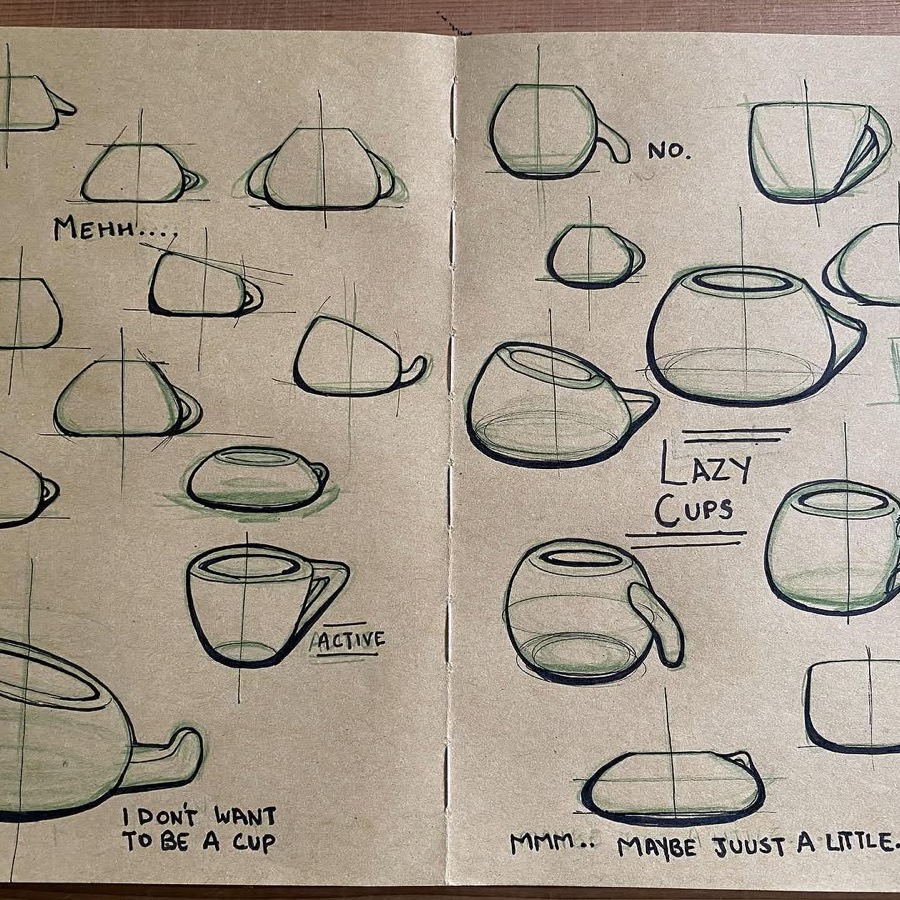
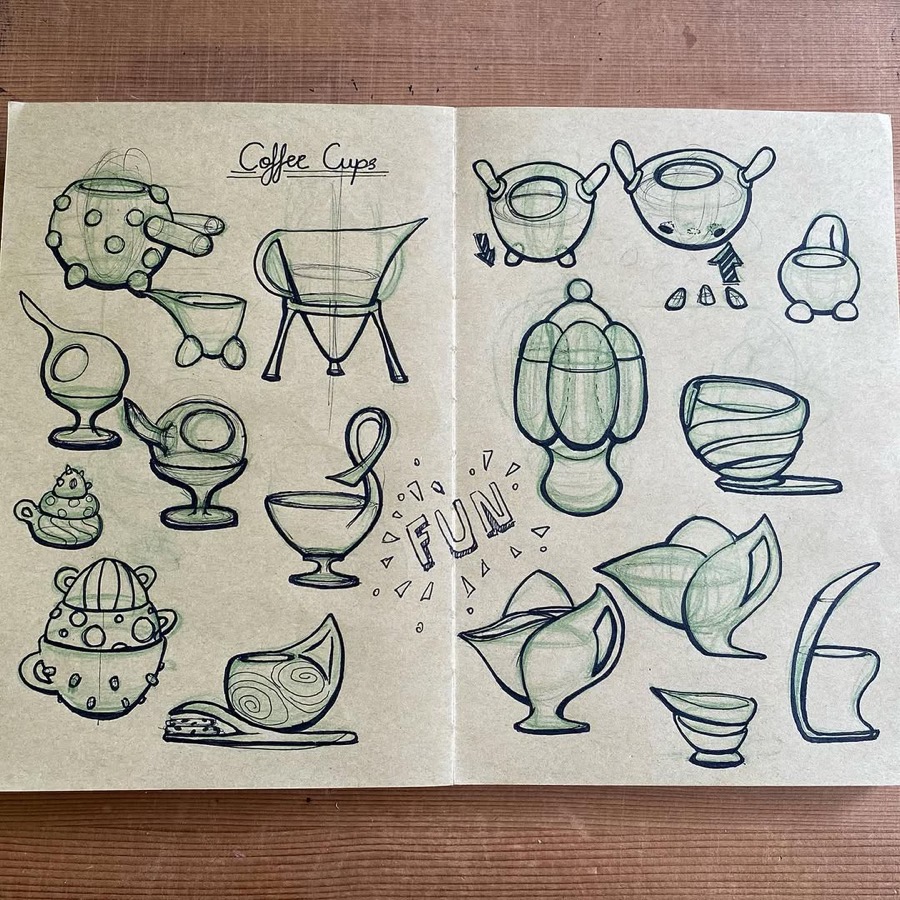
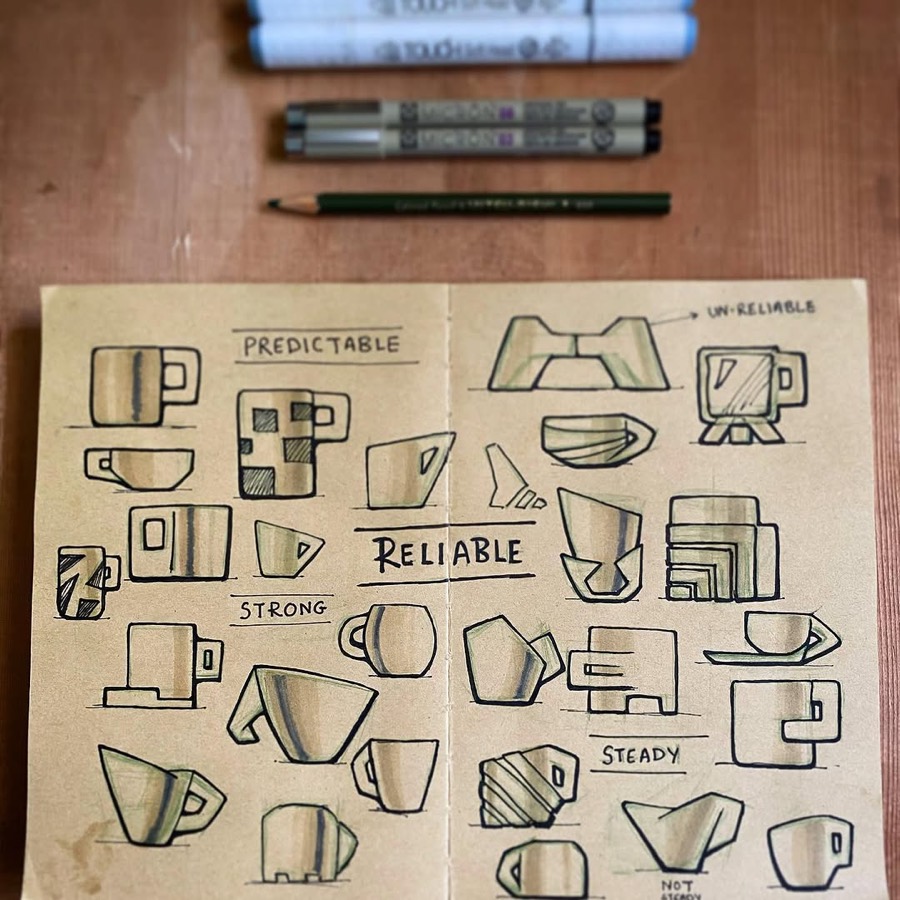
As a young designer I even explored how form could carry emotion and personality, and my subject was, of course, cups. Lazy cups, active cups, strong cups, fun cups, cups that didn't want to be cups.. What I never designed was a cup that looked like a cup.
I did wonder why luxury hotels, and the kings and queens on Netflix, still drink from cups that look almost the same after all these years. I put it down to tradition, and a refusal to move with the times.
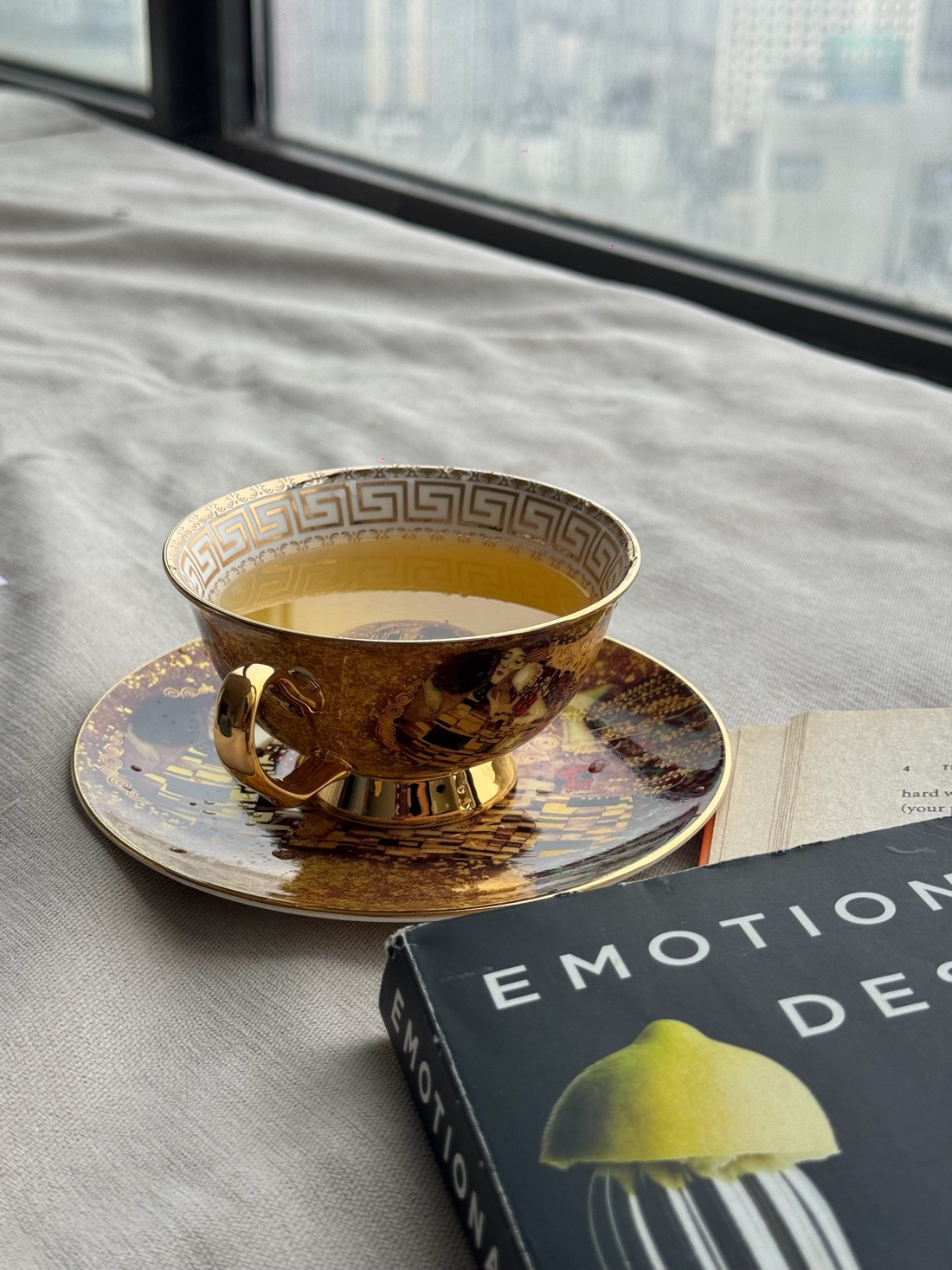
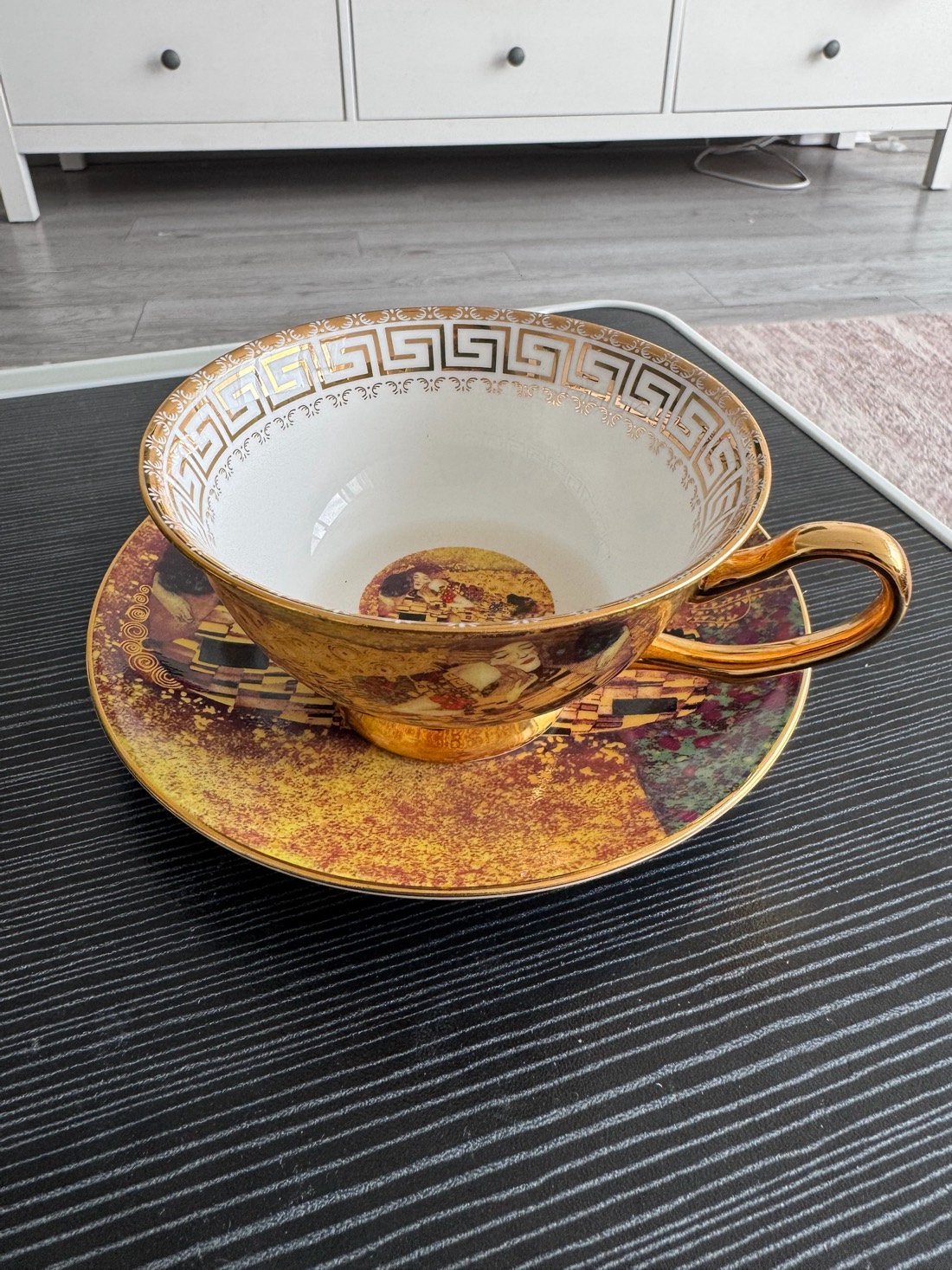
Now I live in China, where fine china was born, and there are more cups here than I saw in my whole childhood. And recently I drank from a handmade bone china cup made by an artist. I understood how wrong I had been.
Layer one: how it makes you feel
There is drama in this cup. There is glamour, a feeling of prestige and, I'll admit, some boasting rights. From a marketing point of view, Seth Godin would be happy: it makes me, the user, feel great about owning it.
Form and aesthetics are only the crust of good design, but that doesn't make them unimportant. The elegant shape and the bright gold on white build its value as a luxury object. Cup, saucer and spoon together feel dainty, delicate and therefore precious.
Layer two: how it works in the hand
Fellow designers, don't leave yet. This is where Don Norman would be happy too.
The material. It looks fragile, but the moment you touch it, it feels strong. A material that looks precious and feels durable is a smart choice, and one I had never noticed before.
The handle. It is balanced and slightly elongated, so it invites you to hold it. There is room not just for thumb and finger, but for the middle finger to share the weight.
The volume. It holds just the right amount for the way I drink tea. Chinese tea traditions are different, and need a very different cup to feel right.
The rim. The bowl is almost a perfect hemisphere, but the rim curves outward, gently and very deliberately. Other cups aren't hard to drink from. This one just makes drinking feel intentionally effortless.
Perfection isn't an accident
I haven't tested every cup in the world. But for the way I drink tea, this one hits every note. And it wasn't made by one great designer. It is the result of small, deliberate improvements by artisans over decades, each one noticing something the last one missed.
We designers like to say we must never think like artists. This cup made me put a pin in that. Whoever gets the credit, patient iteration toward how something feels in a person's hand is exactly what we mean by design.
The classic cup didn't survive because people refused to change. It survived because it was already very, very good.
Written by Aarti Kava, design leader in Shanghai. More from the journal →